
Octopus and CATL bring battery-swapping hubs to UK
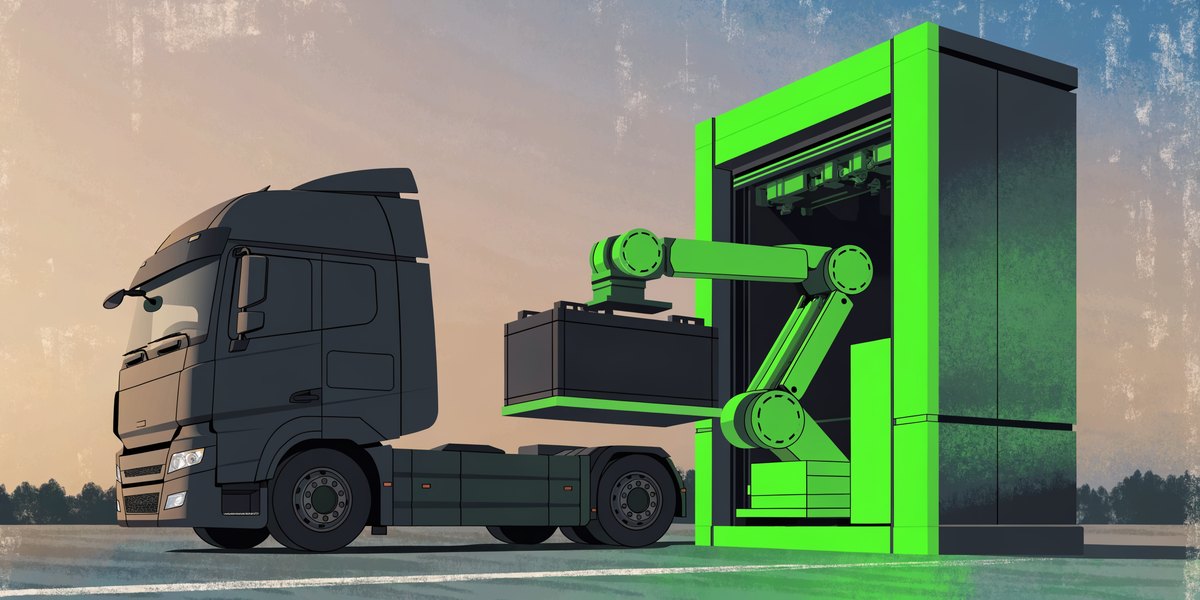
Octopus Energy and CATL have formed a joint venture, called Swaptopus, to build battery-swapping hubs for electric HGVs across the UK and Europe. The pitch: a depleted truck battery swapped out for a charged one in minutes, no plug, no waiting around a depot yard for a megawatt charger to do its job.
The first UK "mega hubs" are pencilled in for 2027, with around 30 sites planned by 2035. Each is designed to handle thousands of trucks a day, and the partners reckon the full network could eventually support 300,000 electric trucks on UK roads. They're also talking up more than £30 billion of private investment the scheme could unlock — a figure that will need testing against actual planning consents and grid connections before anyone banks it. Octopus Energy has the detail.
The technical logic isn't new so much as imported. CATL already runs swap stations at scale in China; Octopus brings the energy-supply and grid-relationship side. Between them they're also exploring scaling Vehicle-to-Grid tech across CATL's global network of automotive partners — which, if it lands, turns a fleet of parked HGV batteries into a genuine grid asset rather than a stranded cost.
Why it matters: heavy goods operators have had precisely no good answer to the charging-time problem on long-haul routes — a 40-tonne artic can't sit on a rapid charger for an hour without wrecking the economics of the job. Swapping turns that dead time into minutes, which is the difference between electrification being a compliance headache and being an operational upgrade. It also sidesteps, at least partially, the grid-capacity constraints that have stalled depot charging schemes across the country.
The catch is timing and scale. 2027 for the first hubs means this solves nothing for anyone decarbonising a fleet this year or next, and 30 hubs by 2035 is a modest footprint against the scale of UK long-haul freight. Standardised battery formats across truck manufacturers will also need sorting before swap-in-minutes becomes swap-anywhere — CATL's China experience doesn't automatically transfer to a market with a more fragmented OEM base.
None of that makes it noise. William Rowe, Swaptopus's CEO, and CATL's Dr Robin Zeng are putting real capital behind an infrastructure model that, if the numbers hold, changes the residual calculus on electric HGVs by removing the biggest objection to them. Fleets planning HGV transition timelines beyond 2027 should treat Swaptopus as a live variable, not a footnote — and start asking now whether truck orders can be spec'd for swap compatibility before hardware decisions lock them out.